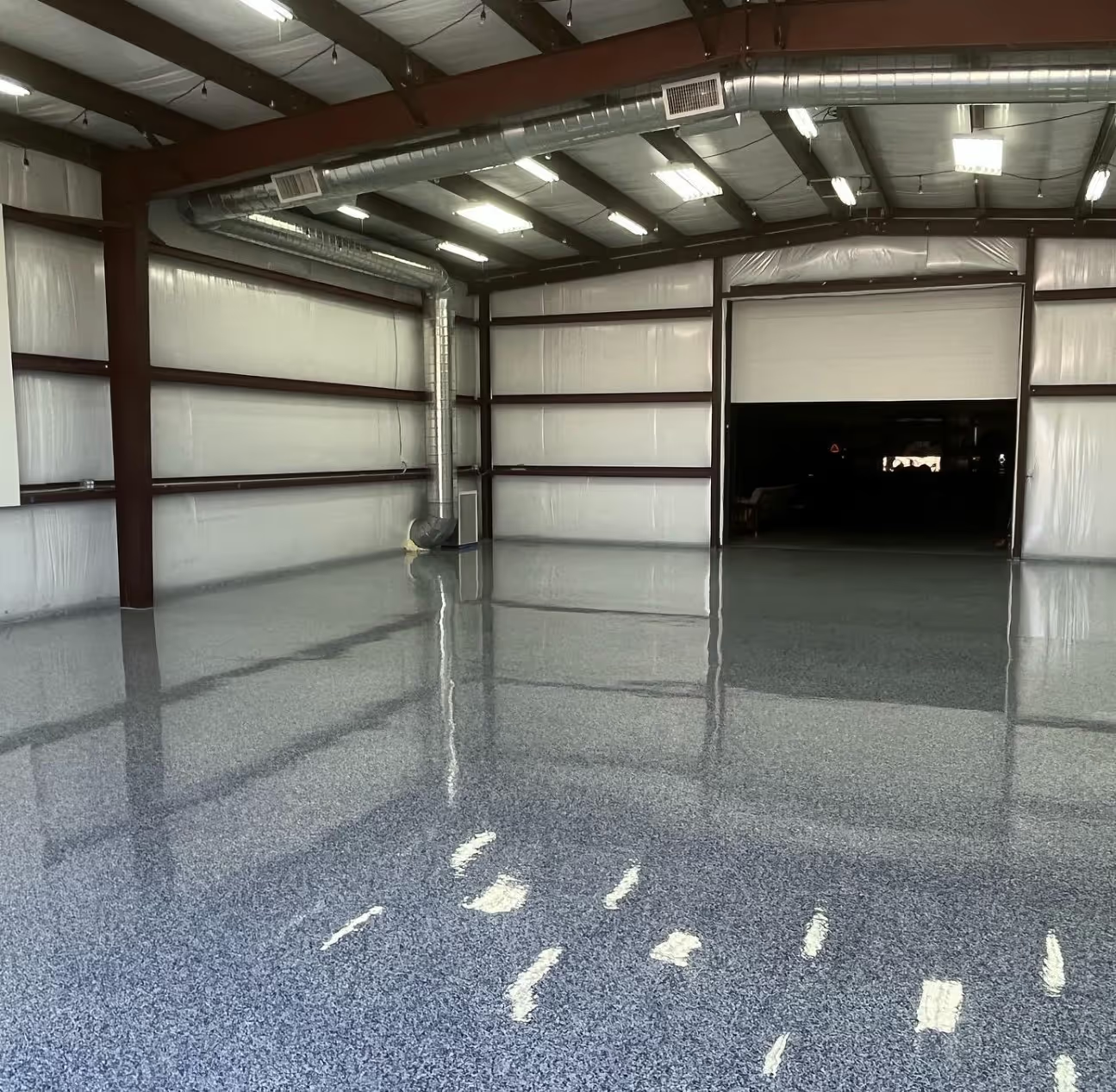
A garage floor coating can turn porous concrete into a sealed, decorative surface, but coating is not the only way to finish a garage slab. Some homeowners may also have concrete that can be mechanically refined and left visible, so the right decision begins with the slab rather than with a color sample.
Phoenix garages face hot tires, dust, oil, strong sunlight near open doors, and regular vehicle traffic. Those conditions should influence whether the concrete is covered with a resin system or used as the finished surface itself.
Start With the Existing Slab
Polished concrete depends heavily on the quality of the slab because the concrete itself remains visible after grinding and refinement. Aggregate, patches, repairs, stains, and color variation can become part of the final appearance instead of being hidden.
A coating provides more visual control because it creates a new surface over properly prepared concrete. Garages with extensive patching, staining, or inconsistent concrete may therefore be better candidates for a decorative resin system than an exposed finish.
Decide How Uniform You Want the Floor to Look
Polished floors naturally show variation. The amount of exposed aggregate, old repairs, and changes in concrete color can create an industrial or architectural character that some homeowners prefer.
Flake coating systems produce a more controlled appearance. Decorative chips can create consistent color variation while helping ordinary dust and minor marks feel less noticeable between cleans.
Think About Phoenix Sunlight
The first section inside a garage door can receive direct Arizona sun for hours while the door is open. That exposure matters when a resin system is selected because standard epoxy can discolor under prolonged UV exposure.
A garage coating system can use an epoxy base with compatible UV-stable polyaspartic protective layers above it. The complete system should be planned together rather than relying on one product name to describe every layer.
Compare the Maintenance Experience
Both finishes can be relatively straightforward to maintain, but they behave differently. A coated floor creates a seamless surface that can help prevent oils and other spills from immediately soaking into bare concrete.
Polished concrete remains the actual slab and is maintained as a refined mineral surface. Regular dust removal and suitable cleaning are still important, particularly in a garage where sand and grit can become abrasive under tires.
Consider How the Garage Is Used
A garage used mainly for parking has different needs from one that doubles as a workshop, detailing bay, gym, or storage room. Rolling toolboxes, jacks, exercise equipment, and project debris can all change what matters most.
A flake-coated floor may offer useful texture in areas that occasionally become wet, while a polished surface can suit homeowners who want a simpler exposed-concrete look. Function should guide the decision before style.
Look at Cracks and Repairs Early
Mechanical preparation reveals the true condition of the slab. Cracks, pits, spalled areas, and old coatings should be identified before either finish is completed.
Repairs may remain more visible on an exposed polished floor because there is no opaque decorative layer above them. With a coating system, the repaired concrete still needs to be sound, but the decorative finish can create greater visual consistency.
Compare Sheen Under Real Garage Lighting
Polished concrete can range from a lower sheen to a highly reflective finish depending on how far the surface is refined. Resin systems can also vary from satin to glossy depending on the protective layer.
Samples or trial areas should be viewed under the garage’s actual lighting. Direct sun, bright LEDs, cabinets, and vehicle colors can make a finish look noticeably different from a photograph or showroom sample.
Plan Around Installation and Return to Use
Both options require the garage to be cleared so the concrete can be prepared properly. Grinding, repairs, polishing or coating, and cleaning all need unrestricted access to the slab.
Coated floors also require cure time before vehicles and heavy equipment return. Polishing follows a different installation sequence, but the project still needs enough time for grinding, refinement, and final treatment before normal use resumes.
Conclusion
Coating and polishing are two different ways to make an existing garage slab into a finished floor. One creates a resin system over prepared concrete, while the other works directly with the slab and allows more of its natural character to remain visible.
The best choice depends on concrete quality, sunlight, repairs, traffic, appearance, maintenance, and the way the garage is used. Starting with the slab makes it easier to choose a finish that works for Phoenix conditions instead of simply selecting the option that looks best in a sample.