Commercial and industrial floors deal with very different demands than most residential floors. Heavy equipment, frequent foot traffic, spills, moisture, and regular cleaning can quickly expose weaknesses in an unsuitable flooring system. For this reason, choosing a floor should involve more than comparing colors or surface finishes. Businesses need to consider durability, safety, maintenance, installation conditions, and the type of activity taking place in the space.
Understand How the Space Will Be Used
The first step is to understand the daily demands placed on the floor. A retail store may mainly experience customer foot traffic, while a warehouse could have forklifts, pallet movement, and heavy loads. Manufacturing facilities may face chemical exposure, equipment vibration, or repeated cleaning.
This difference matters because flooring systems are designed for specific conditions. A surface that works well in a light-use commercial environment may not provide the performance needed in a demanding industrial setting.
Understanding traffic patterns and operating conditions helps narrow down suitable flooring options before installation begins.
Consider Commercial Epoxy Flooring
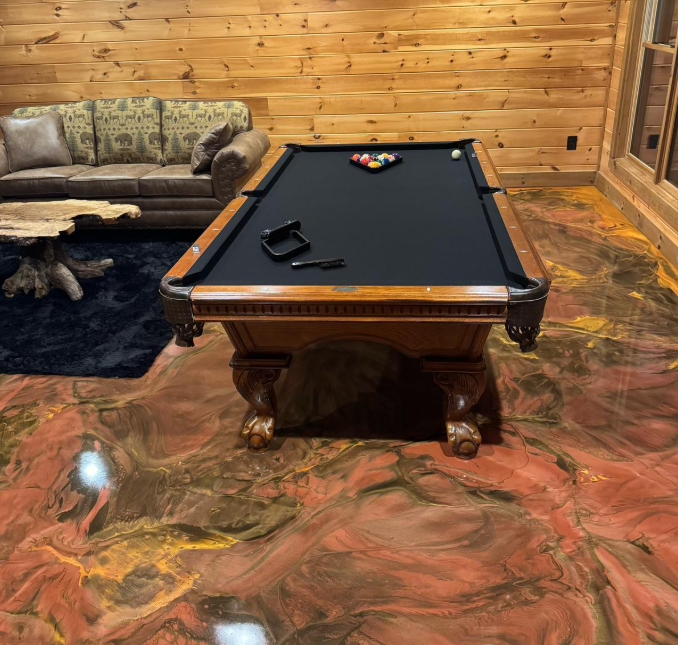
Commercial epoxy flooring is commonly considered for spaces that need a durable and relatively easy-to-maintain surface. Epoxy creates a bonded coating over a properly prepared concrete substrate, producing a seamless finish without the many joints found in some traditional flooring materials.
This can be useful in offices, showrooms, retail areas, workshops, and other commercial environments. The finished surface can also be customized in different colors and finishes depending on the appearance and functional requirements of the business.
However, proper surface preparation remains essential. Dust, grease, moisture, cracks, and other substrate problems should be addressed before the coating is applied. A strong coating cannot compensate for poor preparation underneath it.
When Industrial Floors Need More
Industrial facilities often require flooring that can handle more demanding conditions. Heavy machinery, vehicles, impacts, chemicals, and continuous movement can place considerable stress on a floor.
An industrial epoxy floor coating may be considered when a facility needs a system designed for tougher operating conditions. The appropriate system depends on the environment, expected traffic, chemical exposure, and performance requirements.
Industrial flooring should not be selected solely because it appears thick or durable. The substrate, coating chemistry, installation method, and expected use all influence how well the finished system performs over time.
Safety Should Be Part of the Decision
Workplace flooring can also influence how safely people move through a facility. Smooth surfaces may be suitable in some areas, but certain environments may require additional slip resistance, especially where water, oils, or other liquids are present.
Floor markings and different colors can also help separate work zones, walkways, equipment areas, or storage sections. These visual details can make a large facility easier to navigate when they are planned as part of the overall flooring design.
Businesses should consider cleaning routines as well. A floor that is difficult to clean can create unnecessary maintenance work and may not suit an environment with strict hygiene requirements.
Look at Installation Conditions
Before selecting a flooring system, the concrete substrate should be assessed. Moisture levels, surface strength, cracks, contamination, and previous coatings can all affect installation.
The condition of the concrete may determine whether grinding, repairs, moisture treatment, or other preparation is needed. Temperature and humidity during installation can also influence curing and final performance.
Scheduling should therefore account for preparation and curing time rather than assuming the project can be completed immediately. Commercial properties may need careful planning to reduce disruption to normal operations.
Balance Cost with Long-Term Needs
Initial price is important, but it should not be the only consideration. A cheaper flooring option may require more frequent repairs or replacement if it is poorly suited to the environment.
Businesses should compare expected service life, maintenance requirements, cleaning needs, and installation conditions alongside the upfront cost. Getting clear information about preparation and the proposed flooring system can make comparisons more useful.
Conclusion
Choosing flooring for a commercial or industrial property requires a practical assessment of how the space operates every day. Traffic, equipment, moisture, chemicals, cleaning routines, safety, and substrate conditions should all influence the decision. Commercial epoxy flooring can suit many professional environments, while an industrial epoxy floor coating may be more appropriate for facilities facing heavier demands. Careful evaluation before installation can help businesses select a flooring system that fits both their operational needs and long-term maintenance plans.