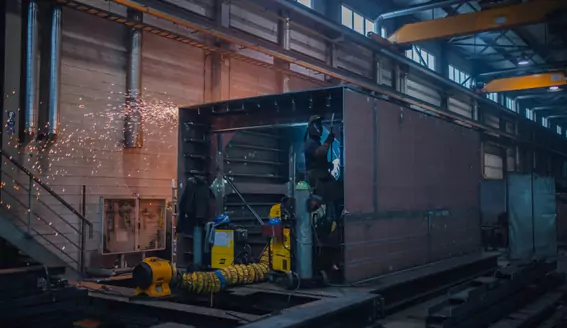
India’s rapid industrialization and infrastructure expansion have placed steel at the center of national development. From highways and metro rail projects to factories, power plants, and commercial complexes, steel continues to be the backbone of modern construction. In this evolving landscape, E S HAJI & CO has recognized how innovation is reshaping Steel Fabrication in India, enabling stronger structures, faster execution, and higher quality standards. Today, steel fabrication is no longer limited to conventional cutting and welding; it is being transformed by technology, automation, and smarter engineering practices.
The Evolution of Steel Fabrication in India
Traditionally, steel fabrication in India relied heavily on manual labor and basic machinery. While this approach supported early industrial growth, it often resulted in longer project timelines, material wastage, and inconsistent quality.
Over the past decade, however, the industry has witnessed a significant transformation. Increased demand for precision, large-scale structures, and faster delivery has driven fabricators to adopt advanced tools, modern processes, and international best practices. This evolution has positioned India as a competitive player in the global steel fabrication market.
Role of Automation and Advanced Machinery
One of the most impactful innovations in steel fabrication is automation. CNC (Computer Numerical Control) machines, robotic welding systems, and automated cutting equipment have revolutionized fabrication processes.
Automation improves accuracy, repeatability, and efficiency while reducing dependency on manual intervention. Complex steel components can now be fabricated with tight tolerances, ensuring seamless on-site assembly. These advancements have significantly reduced errors, rework, and project delays.
High-Strength and Specialized Steel Materials
This demand has led to the expansion of Steel Fabrication Services that offer end-to-end solutions from design and engineering to fabrication and installation. Material innovation has played a major role in transforming steel fabrication. High-strength steel, corrosion-resistant alloys, and weather-resistant materials are increasingly being used in Indian projects.
These advanced materials allow structures to be lighter, stronger, and more durable. In sectors such as infrastructure, oil and gas, and renewable energy, specialized steel materials help withstand extreme environmental conditions while maintaining structural integrity.
Precision Cutting and Fabrication Techniques
Modern Steel Fabrication Services now use advanced cutting technologies such as laser cutting, plasma cutting, and water jet cutting. These techniques allow for precise cuts, smooth edges, and intricate designs that were difficult to achieve with traditional methods.
Precision cutting improves material utilization and enhances the overall quality of fabricated components. It also enables the production of complex geometries required in modern architectural and industrial projects.
Improved Welding Technologies
Welding remains a critical aspect of steel fabrication, and innovation in welding techniques has significantly improved strength and reliability. Automated and semi-automated welding processes ensure consistent weld quality and reduce defects.
Advanced welding methods such as MIG, TIG, and submerged arc welding are widely adopted for heavy fabrication projects. These technologies enhance joint strength, reduce fabrication time, and improve safety standards.
Quality Control and Compliance Standards
Innovation in steel fabrication is not limited to production it also extends to quality control. Modern fabrication units use advanced inspection tools, non-destructive testing methods, and digital measurement systems to ensure compliance with national and international standards.
Strict quality control ensures that fabricated steel components meet safety, load-bearing, and durability requirements. This focus on quality has increased trust among clients and contributed to the global acceptance of Indian-fabricated steel products.
Sustainability and Eco-Friendly Practices
Sustainability has become a major driver of innovation in steel fabrication. Fabricators are adopting eco-friendly practices such as optimized material usage, energy-efficient machinery, and recycling of scrap steel.
Steel itself is a highly recyclable material, and modern fabrication techniques minimize waste generation. Sustainable fabrication practices not only reduce environmental impact but also lower production costs and improve long-term viability.
Growing Demand for Customized Solutions
With increasing complexity in construction and industrial projects, demand for customized steel solutions has grown rapidly. Clients now seek tailor-made components designed for specific applications rather than standard sections.
These services enable greater flexibility, improved coordination, and better project outcomes, especially for large and complex developments.
Impact on Infrastructure and Mega Projects
India’s infrastructure boom has significantly benefited from innovations in steel fabrication. Mega projects such as bridges, airports, metro rail systems, and industrial corridors rely heavily on prefabricated steel components.
Innovative fabrication methods allow large sections to be manufactured off-site and assembled quickly on-site, reducing construction time and minimizing disruption. This approach has become essential for meeting tight deadlines and maintaining quality standards in large-scale projects.
Skilled Workforce and Training Advancements
While technology plays a major role, skilled manpower remains essential in steel fabrication. Training programs, certification courses, and skill development initiatives have improved workforce capabilities across India.
Fabricators now invest in continuous training to ensure workers can operate advanced machinery and follow modern fabrication practices. This combination of skilled labor and technology has strengthened the overall industry.
Challenges and Adaptation
Despite rapid innovation, the steel fabrication industry faces challenges such as fluctuating raw material prices, skilled labor shortages, and increasing competition. However, innovation has enabled fabricators to adapt through efficiency improvements, automation, and diversification of services.
By embracing change, the industry continues to overcome these challenges and maintain steady growth.
Future of Steel Fabrication in India
The future of steel fabrication in India looks promising. Integration of artificial intelligence, smart manufacturing systems, and real-time monitoring will further enhance productivity and precision.
As India continues to invest in infrastructure, renewable energy, and industrial expansion, steel fabrication will remain a critical enabler of growth. Innovation will continue to drive efficiency, sustainability, and global competitiveness.
Innovations are fundamentally transforming steel fabrication in India. From automation and digital design to advanced materials and sustainable practices, the industry has evolved to meet modern construction and industrial demands.