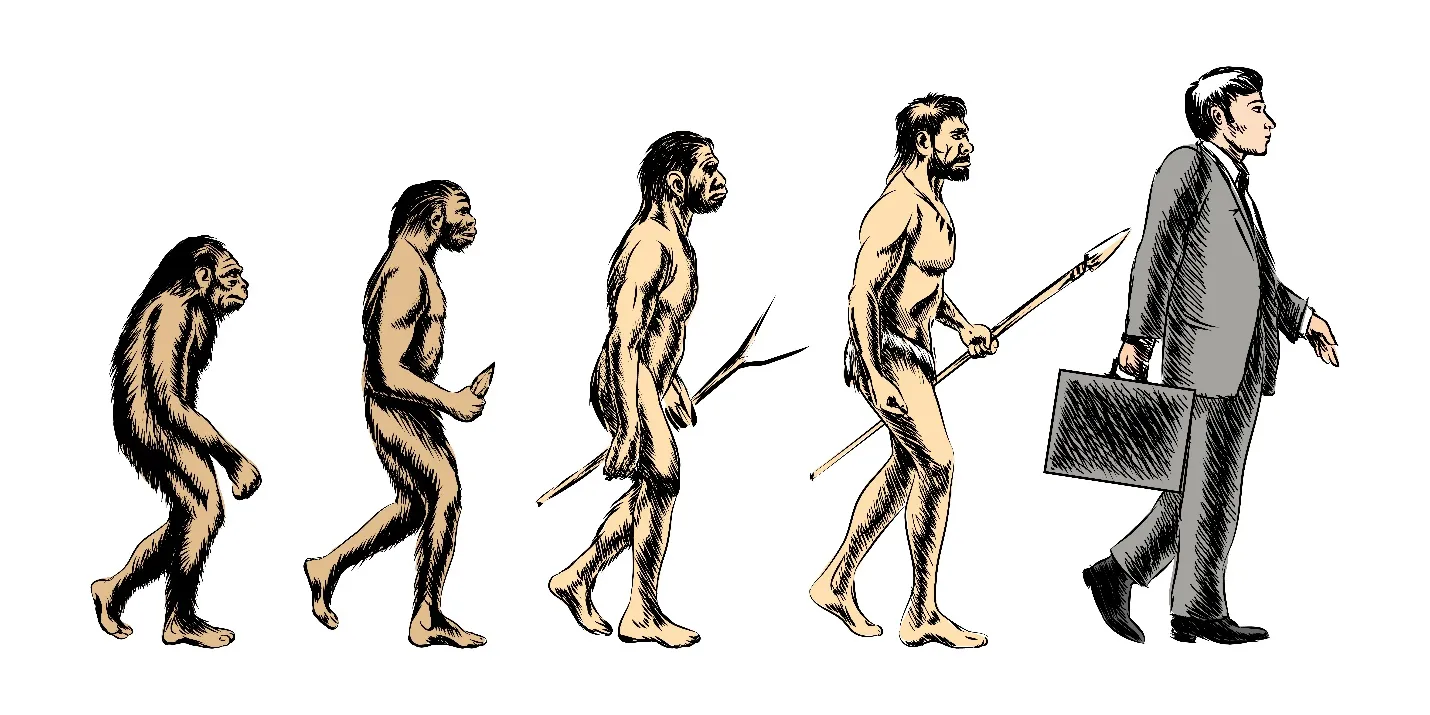
Human evolution remains one of the most fascinating scientific subjects because it explains how modern humans developed over millions of years. From early upright ancestors to the complex societies people live in today, the journey of human development involved countless biological, environmental and behavioral changes.
Scientists continue to study fossils, genetics, and archaeological discoveries to better understand how humans evolved and adapted over time. By studying the Human Evolution Timeline, researchers can trace important milestones that gradually shaped intelligence, physical abilities, communication, and survival skills.
Rather than a straight path, evolution occurred through gradual changes, environmental pressures, and the appearance of different human ancestors, each contributing in some way to modern humanity.
What Is Human Evolution?
Human evolution refers to the long biological process through which modern humans developed from ancient primate ancestors.
This process took place over millions of years and involved physical adaptations, changing climates, migration patterns, and evolving survival strategies. Early human ancestors did not suddenly become modern people. Instead, small genetic and physical changes accumulated over long periods of time.
Scientists rely on fossils, DNA research, and historical evidence to understand this process. These discoveries help explain how humans developed larger brains, improved mobility, stronger communication skills, and increasingly advanced social behavior.
Studying the Human Evolution Timeline helps place these developments into historical context, allowing researchers to better understand how different species contributed to the story of humanity.
The Earliest Human Ancestors
One of the earliest chapters in human development began several million years ago with ape-like ancestors living in Africa.
Some early ancestors gradually developed the ability to walk upright, a change that became important for survival. Walking on two legs allowed greater visibility across landscapes, improved mobility, and freed the hands for carrying food or using tools.
These physical adaptations played a major role in survival and marked some of the earliest Stages of Human Evolution.
At this point, early ancestors still looked quite different from modern humans. Brain size remained smaller, communication abilities were limited, and daily life centered around survival in changing environments.
The Rise of Tool Use and Adaptation
As evolution continued, certain ancestors developed more advanced behaviors.
One major turning point involved the use of tools. Early humans began shaping stones into cutting tools, improving their ability to hunt, prepare food, and defend themselves.
Tool use influenced survival in several ways:
-
Improved access to food sources
-
Better protection from predators
-
Increased adaptability to changing environments
-
Stronger cooperation between groups
Researchers often view tool-making as an important milestone because it reflected growing intelligence and problem-solving skills.
The Human Evolution Timeline highlights this period as a major step toward cognitive development and more organized social structures.
Brain Development and Social Growth
One of the most significant changes in human evolution involved brain expansion.
Larger brains allowed early humans to improve memory, communication, planning, and cooperation. Over time, humans became better at adapting to difficult environments and solving complex problems.
This stage also saw improvements in:
Language and Communication
Although early forms of communication likely existed for survival purposes, more advanced language gradually strengthened cooperation and social interaction.
Hunting and Food Sharing
Groups increasingly worked together, improving survival rates and encouraging stronger communities.
Cultural Development
Over time, humans developed traditions, social learning, and shared knowledge.
These developments represent some of the most influential Stages of Human Evolution, helping humans adapt more successfully than many other species.
Migration and Human Expansion
As environmental conditions changed, early humans gradually migrated beyond Africa into Asia, Europe and other parts of the world.
Migration exposed humans to different climates and survival challenges, leading to further adaptation.
Cold weather required new forms of clothing and shelter, while different food sources encouraged new hunting and gathering techniques.
The ability to adapt became one of humanity’s greatest strengths.
According to the Human Evolution Timeline, migration played an important role in shaping genetic diversity and helping populations survive across very different environments.
The Emergence of Modern Humans
Eventually, modern humans known scientifically as Homo sapiens emerged with greater intelligence, advanced communication abilities and stronger social systems.
Unlike earlier ancestors, modern humans developed:
-
More advanced tools
-
Symbolic thinking and creativity
-
Art and cultural expression
-
Complex communities and cooperation
These improvements supported long-term survival and eventually led to agriculture, civilization and technological development.
The later Stages of Human Evolution show how adaptation extended beyond physical traits and increasingly involved culture, innovation and knowledge sharing.
Why Human Evolution Still Matters Today
Understanding evolution is not only about learning history. It also helps explain why humans behave, think, and adapt the way they do today.
Modern medicine, genetics, and anthropology continue benefiting from research into ancient human development.
Studying the Human Evolution Timeline also offers insight into how environmental changes, survival pressures, and cooperation shaped modern societies.
As scientific discoveries continue, researchers may uncover even more details about humanity’s remarkable journey.
Final Thoughts
Human evolution was a long and complex process shaped by adaptation, migration, intelligence and survival. From early upright ancestors to advanced modern societies, every stage contributed to the development of humanity as it exists today.
The Human Evolution Timeline helps explain this journey by connecting major discoveries across millions of years, while the Stages of Human Evolution reveal how physical and behavioral changes gradually shaped modern humans. Understanding this process not only deepens appreciation for human history but also provides valuable insight into how people continue adapting in an ever-changing world.